Year end for MCQN Ltd is the end of September, so we’ve just entered our 22nd year of operation. October is also Open Hardware Month, which is an annual celebration of (and encouragment to talk about) open hardware.
They both feel like suitable nudges for us to get back to talking about what we’ve been up to. So let’s start a new season of weeknotes.
It’s Adrian here, given it’s my fault that there’s been such a hiatus (even beyond everything being my fault as the boss). I’m sure the fact that our radio silence coincided with me moving house and doing a load of home renovations is purely accidental.
Since we last spoke most of our focus has been on Museum in a Box.
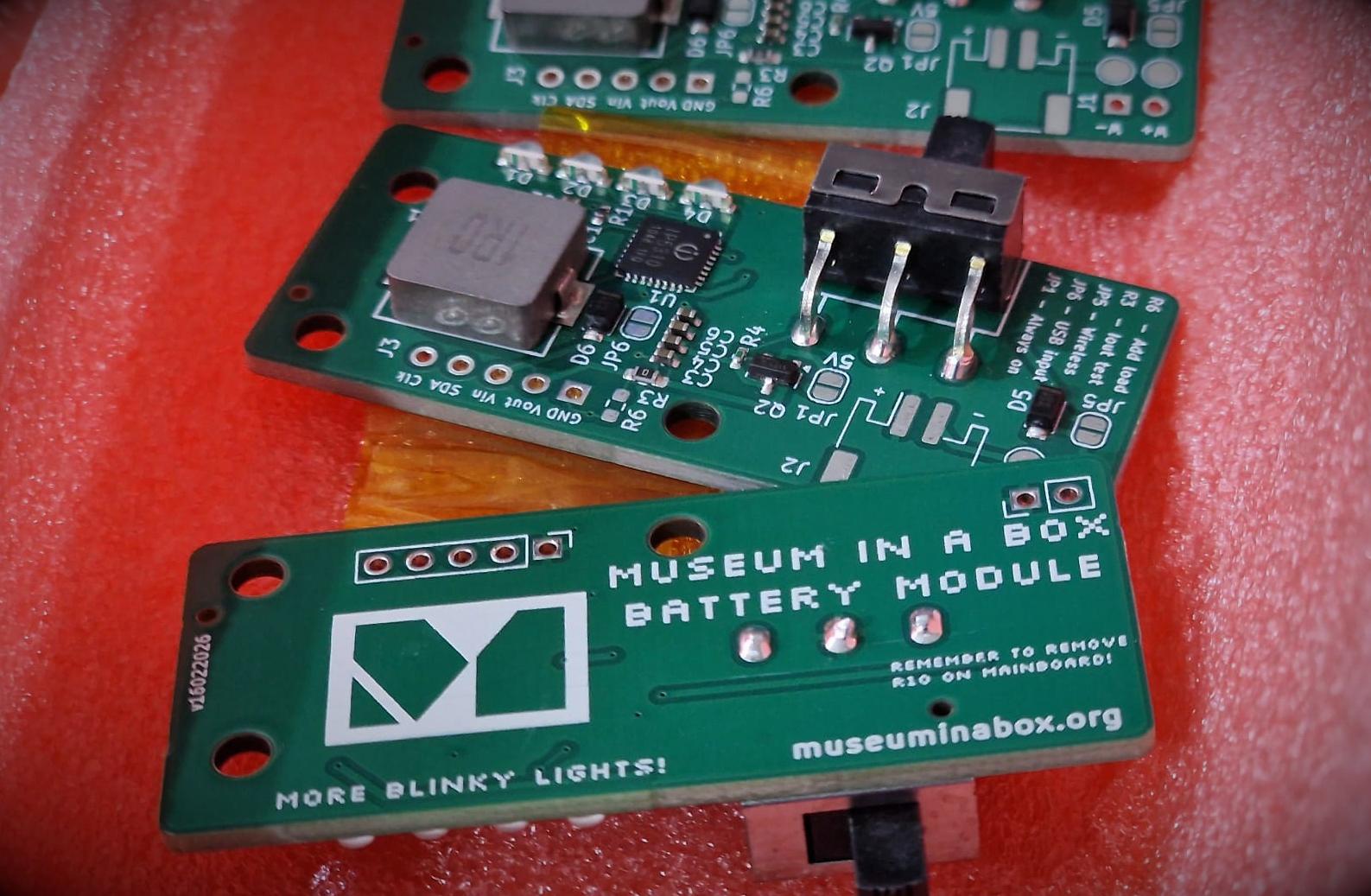
As part of a commission (we’re looking forward to sharing more on that when we can) we’ve added an option to run the Box from an internal battery. This is something we’ve been asked about a few times over the years, and had built in the possibility for that when we did the big PCB redesign a while back.
That redesign included an option to add an extra circuit board to connect to a rechargeable battery, and route the power from the USB connector to charge it. Chris took the work we’ve done with the My Bike’s Got LED board for its battery management, and spun it out into these dinky PCBs that can sit below the main Museum in a Box board; giving us a self-contained battery-powered Museum in a Box.
We’ve also been improving the software side of Museum in a Box. The firmware on the Box itself has seen a new release—that updates it to a newer version of the underlying operating framework, and adds an assortment of bug fixes and improvements.
Most notable among those is the new visual progress indicator. Checking for updates, downloading new audio files, etc. can take a while, and aside from the audio cue at the start of each stage of the process there was no way to know if the Box was finished. We’re now using the big green LED on the front of the Box to help: when the Box is working it will fade the green LED on and off. And when it’s running through all of the audio files it needs to download (or check if they’ve changed) it uses the row of yellow LEDs as a progress bar.
That should make Box admin even easier.
The software updates aren’t just limited to the firmware on the Box itself. I’ve also been working on the accompanying online platform. Most of that has been maintenance tasks: moving to the latest version of the hosting platform; and moving to a newer version of the Django framework it’s built upon. All with the assorted dependency updates and tweaks needed along the way. So nothing too visible, but much better behind the scenes.
Alongside all that there has been a steady heartbeat of new orders coming in and being shipped out to customers.
Normally that just involves a visit from our friendly neighbourhood UPS driver, but last week we made an exception.
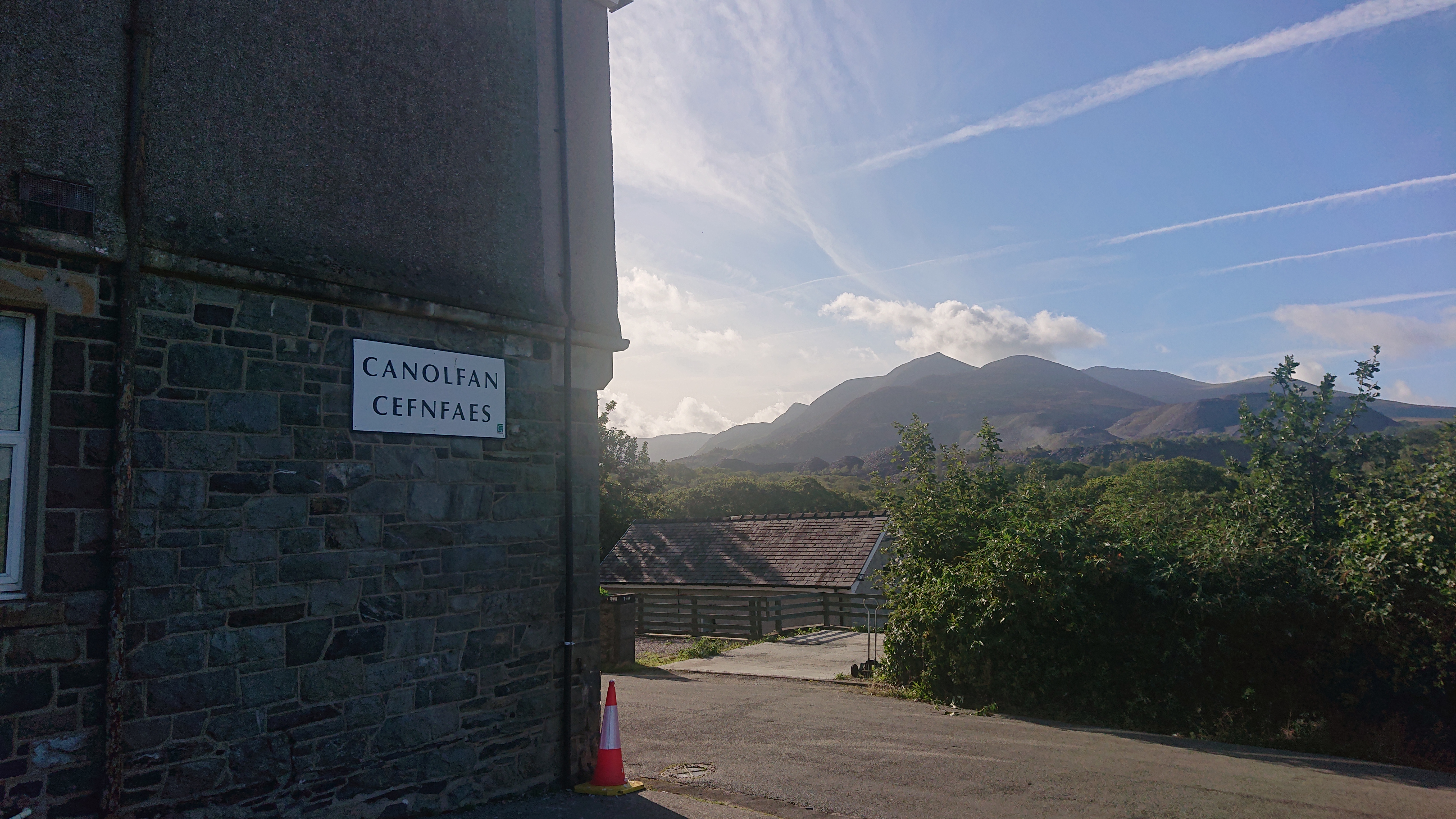
We had an order from an organisation in Bethesda, in North Wales. Rather than post it out to them we had a roadtrip over the border to deliver it in person. That meant we could catch up with our mate and open-source legend Jo Hinchliffe (aka concretedog), as well as take in glorious views of the Welsh mountains.